
#1 Complete & Ultimate Small Business Registration Requirements Philippines 2026 (Easy Guide)
Transitioning from a corporate employee or launching a casual online business Philippines storefront into a legally registered business owner is a massive financial milestone. However, the regulatory landscape is notoriously unforgiving. Recently, the Bureau of Internal Revenue (BIR) and the Department of Trade and Industry (DTI) implemented strict, mandatory registration crackdowns targeting e-commerce sellers, digital content creators, and traditional brick-and-mortar storefronts. Operating without the proper state permits is no longer a minor infraction; it carries severe risks of digital storefront suspension, confiscation of assets, and devastating financial penalties.
Many aspiring entrepreneurs make the critical mistake of assuming that securing a dti registration online is the end of the process. In reality, getting your DTI certificate is merely step one of a grueling, multi-agency gauntlet. You must legally navigate your municipal Business Permits and Licensing Office (BPLO) to secure your business permit, satisfy the rigorous documentation of the BIR, and establish yourself as an official employer with the state’s mandatory social welfare funds.
As the premier authority on Philippine regulatory compliance, RequirementPH has engineered this definitive, stress-free masterclass. We will break down the exact, chronological Small Business Registration Requirements Philippines 2026. You will learn how to prepare your foundational documents, secure your mayor’s permit, legalize your tax footprint, and avoid the devastating bureaucratic traps that bankrupt small businesses before they even launch.
Phase 1: The Foundational Identity Setup (Prerequisites)
Government agencies will not grant commercial licenses to an undocumented individual. Before you attempt to fulfill your Small Business Registration Requirements Philippines 2026 checklist, your personal identity and civil registry records must be absolutely flawless and perfectly aligned across all databases. A single name mismatch will result in an immediate application rejection at the municipal hall.
1. Civil Registry Alignment
Your business profile is permanently tethered to your legal name. You must secure a freshly authenticated PSA Birth Certificate. If you are a married female entrepreneur opting to use your marital name for your business, you must present a verified PSA Marriage Certificate. If your birth records contain any spelling discrepancies compared to your valid IDs, you must freeze your business launch and execute a PSA Birth Certificate Correction first.
2. Apex Valid Identification
Every agency, from the DTI to the BIR, requires presentation of Primary Valid IDs. Ensure your wallet is updated with apex-tier credentials. We highly recommend utilizing the National ID (PhilSys) or an active DFA Passport. If your primary IDs are expired, cross-reference our Complete Government ID Requirements Philippines database to secure acceptable alternatives like the Postal ID or Voters ID.
Phase 2: DTI Business Name Registration (Sole Proprietorship)
The Department of Trade and Industry (DTI) grants you the exclusive legal right to use your chosen business name within a specific territorial scope. This does not give you the license to operate; it merely reserves and legalizes your trade name.
1. Territorial Scope and Fees for DTI Registration
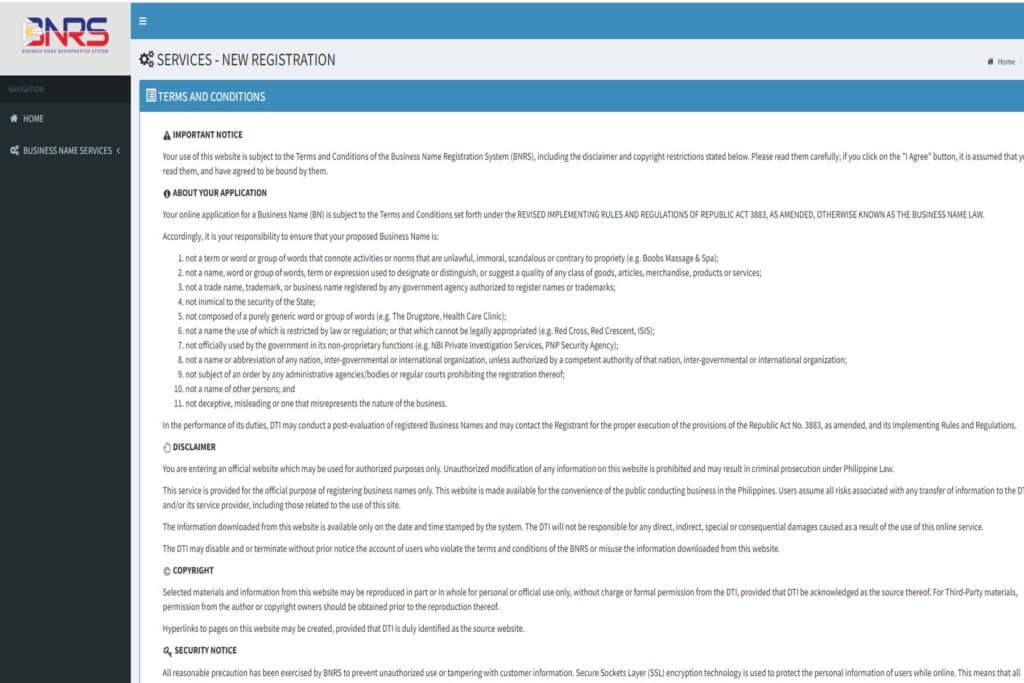
When applying through the official dti business name registration system (BNRS), you must choose the geographical scope of your business protection. This dictates your application fee:
- Barangay (₱200): Protects your name only within your local village.
- City / Municipality (₱500): Protects your name across the entire city.
- Regional (₱1,000): Protects your name across an entire administrative region.
- National (₱2,000): Grants absolute exclusivity nationwide (highly recommended for online e-commerce sellers).
*Note: A nominal documentary stamp tax (DST) of ₱30 is typically added to these baseline fees.
Phase 3: The Local Government Unit (LGU) Clearances
With your DTI Certificate secured, you must proceed to your local City or Municipal Hall to acquire your business license permit. This phase is historically the most exhausting part of the Small Business Registration Requirements Philippines 2026 process, as it requires you to prove that your physical operating space complies with local zoning, health, and safety ordinances.
1. Barangay Business Clearance
Before the Mayor’s office entertains your application, your local Barangay Captain must approve your business activity. You will need to present your DTI Certificate, a Contract of Lease (if renting) or Land Title (if owned), and your Barangay ID or Residence Certificate (Cedula Requirements). This clearance proves your business will not cause localized community disturbances.
2. The Mayor’s Permit (BPLO Processing)
Submit your DTI and Barangay Business Clearance to the Business Permits and Licensing Office (BPLO) at your City Hall to apply for your official mayor’s permit. You will be required to secure several ancillary clearances depending on your industry:
- Locational / Zoning Clearance: Proves your business type is allowed in your specific address (e.g., no industrial factories in residential zones).
- Fire Safety Inspection Certificate (FSIC): Issued by the Bureau of Fire Protection (BFP) after inspecting your premises for fire extinguishers and safe electrical wiring.
- Sanitary Permit: Mandatory for food businesses, salons, and clinics, requiring health certificates for all personnel.
Phase 4: Bureau of Internal Revenue (BIR) Registration
Operating a business with a Mayor’s Permit but without BIR registration is considered tax evasion. You must register with the Revenue District Office (RDO) that holds jurisdiction over your business address within 30 days of securing your permits.
1. Securing Your Certificate of Registration (Form 1901)
If you already possess a personal TIN from previous employment, you will not be issued a new one; your existing TIN will be updated to a business classification using BIR Form 1901. Review the digital updating parameters in our TIN ID Online Registration Philippines guide. Upon successful registration, the BIR will issue your certificate of registration (COR / Form 2303). This COR must be framed and visibly displayed at your place of business at all times.
2. Authority to Print (ATP) & Books of Accounts
Simultaneous with your COR release, you must apply for an Authority to Print (ATP) to legally commission accredited printers to produce your Official Receipts (for services) or Sales Invoices (for goods). Additionally, you must register your manual Books of Accounts (Journal, Ledger, Cash Receipts, and Cash Disbursements books), which will be physically stamped by the BIR officer.
Phase 5: Mandatory Statutory Employer Registrations
The moment you hire your very first employee, Philippine Labor Laws mandate that you immediately register your business as an official employer with the three major social welfare agencies. Failing to remit your employer share of their contributions carries severe criminal liabilities.
- Social Security System (SSS) Employer Registration: You must secure an Employer Number to remit your employees’ pension and loan deductions. Utilize our SSS Online Login Philippines guide to access the employer portal, and ensure your payroll deductions strictly match the official SSS Contribution Table 2026.
- PhilHealth Employer Registration: Register your business to secure your PhilHealth Employer Number (PEN). Your employees will need active coverage; guide them using our PhilHealth Online Registration Philippines manual.
- Pag-IBIG Fund Registration: Secure your Pag-IBIG Employer ID to remit mandatory housing fund savings. Instruct your new hires to finalize their profiles via the Pag-IBIG Online Registration system.
Phase 6: Specialized Clearances & Employee Management
As your business scales, your hiring procedures must enforce strict background verifications to protect your commercial assets and satisfy DOLE inspections.
- Employee Vetting: You must require all incoming staff to submit up-to-date background checks. Direct your applicants to our First Time Job Requirements Philippines checklist, ensuring they specifically provide a valid NBI clearance via the Clearance Requirements Philippines framework.
- Professional & Transport Logistics: If your business involves delivery fleets, ensure all drivers carry professional licenses verified through the Driver’s License Requirements Philippines guide. If you operate a clinic or engineering firm, your staff must possess active PRC accreditations.
⚠ Important Commercial Regulatory Notice
RequirementPH operates strictly as an independent, privately-funded educational index mapping public administrative workflows in the Philippines. We are NOT affiliated, associated, authorized, endorsed by, or in any way officially connected with the Department of Trade and Industry (DTI), the Bureau of Internal Revenue (BIR), or any municipal Business Permits and Licensing Office (BPLO).
Commercial tax brackets, BMBE (Barangay Micro Business Enterprise) exemption eligibility, and municipal zoning fees are highly localized and subject to immediate legislative adjustment. Operating a commercial enterprise without completing the full DTI, LGU, and BIR pipeline is a severe offense punishable by closure and prosecution. Always process your final commercial applications exclusively through official `.gov.ph` portals or physically verified municipal offices. For official legal texts regarding the National Internal Revenue Code and commercial regulations, cross-reference with the Bureau of Internal Revenue (BIR) and the Official Gazette of the Republic of the Philippines.
Strategic Resource Links for Entrepreneurs
To seamlessly navigate your upcoming business applications and employee management structures, cross-reference your documentation with our central pillar guides:
- Freelancer Government Registration Philippines (For Digital Nomads & Solo Contractors)
- Government Loan Requirements Philippines 2026 (For Entrepreneurs Seeking SME Capital)
- Complete Civil Registry Requirements Philippines 2026 (For Fixing Identity Mismatches)
- SSS Salary Loan Requirements Philippines (Guiding Your New Employees)