
Essential Pag-IBIG Housing Loan Requirements Philippines 2026 (Guaranteed Complete Guide)
For millions of working Filipinos, purchasing a residential lot or buying house units is the ultimate financial milestone. As property values continue to rise across Metro Manila and surrounding provinces, securing a low-interest financial backing is essential. The Home Development Mutual Fund (HDMF) provides the most accessible ph loan program through its staple financing package: the official pag ibig housing loan.
Whether you are planning to build a house from scratch, purchase a townhouse, or explore refinancing options for a loan for loan restructuring, understanding the updated Pag-IBIG Housing Loan Requirements Philippines 2026 will determine your approval speed. Compared to a rigid commercial bank housing loan, Pag-IBIG offers flexible terms, lower equity downpayments, and longer payment horizons for every qualified member.
In this comprehensive guide by REQUIREMENTS PH and GabayPinoyPH, we will walk you through the core housing loan requirements, calculate your potential loan amortization based on your gross monthly income, and guide you step-by-step from submitting your pag ibig housing loan application form to securing an approved loan.
Core Eligibility Criteria for Pag-IBIG Housing Loans
Before gathering your physical folders, verify if you satisfy the baseline eligibility standards for a pag ibig home loan:
- Legal Capacity: Must possess full legal capacity to acquire and encumber real property under Philippine laws.
Complete Pag-IBIG Housing Loan Requirements 2026 Checklist
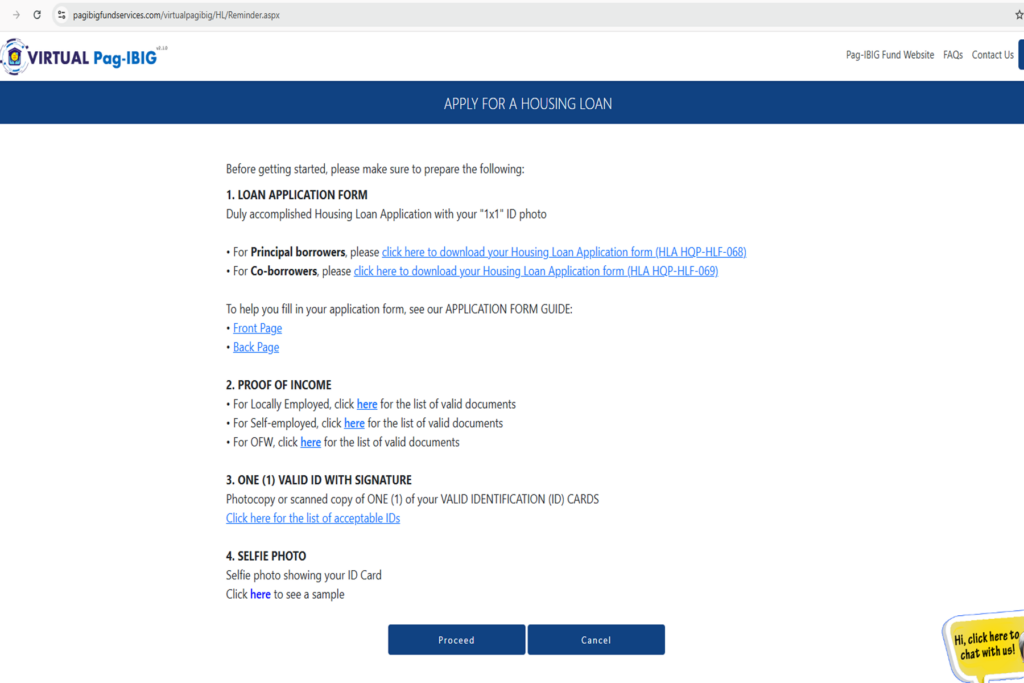
Preparing your home loan requirements accurately prevents filing rejections. The required documents are divided into basic application forms, income proof, and technical property documents.
1. Basic Application Documents
- Two (2) signed copies of the official pag ibig housing loan form (HLAF).
- One (1) recent 1×1 ID photo of the principal borrower and co-borrower (if applicable).
- Photocopy of two (2) primary valid government IDs (front and back) of the borrower and spouse/co-borrower. Refer to our Ultimate Valid ID Requirements Philippines Guide.
- Proof of billing address (e.g., Meralco, Maynilad, or telco bill).
2. Proof of Income Requirements
Your allowable loan amount is directly tied to your proven financial capacity. Submit the applicable set based on your employment status:
For Locally Employed Members:
- Notarized Certificate of Employment and Compensation (CEC) indicating basic salary, allowances, and tenure.
- Latest three (3) consecutive months of payslips.
- Latest Income Tax Return (ITR / BIR Form 2316) with attached W2 stamp.
For Overseas Filipino Workers (OFWs):
- Employment Contract authenticated by the Migrant Workers Office (MWO) / POEA.
- Special Power of Attorney (SPA) notarized prior to departure or consularized/Apostilled by the Philippine Embassy abroad.
- Latest proof of monthly remittance or passbook record.
For Self-Employed / Business Owners:
- DTI or SEC Registration Certificate and Mayor’s Business Permit.
- Audited Financial Statements (AFS) for the past two (2) years.
- Latest BIR Form 1701 ITR with official tax payment receipts.
3. Technical Property Documents
- Certified True Copy of the Transfer Certificate of Title (TCT) or Original Certificate of Title (OCT) issued by the Registry of Deeds.
- Certified True Copy of the Tax Declaration (Land and Building).
- Updated Real Property Tax Receipt (Tax Clearance).
- Vicinity Map / Location Sketch of the property showing landmark reference points.
2026 Loan Limits, Interest Rates, and Amortization Terms
When structuring your home in loan contract, Pag-IBIG allows members to borrow up to ₱6,000,000.00, depending on actual financial need and capacity. The interest rate regime for a housing loan philippines package is structured as follows:
| Program Type | Minimum Gross Monthly Income | Interest Rate (2026) | Max Loan Term |
|---|---|---|---|
| Affordable Housing Program (AHP) | Up to ₱15,000 (NCR) / ₱12,000 (Provinces) | 3.0% per annum (3-Year Fixed) | Up to 30 Years |
| Regular Housing Loan (1-Yr Fixed) | Based on loan capacity | 5.75% per annum | Up to 30 Years |
| Regular Housing Loan (3-Yr Fixed) | Based on loan capacity | 6.375% per annum | Up to 30 Years |
| Regular Housing Loan (5-Yr Fixed) | Based on loan capacity | 7.25% per annum | Up to 30 Years |
Rule of Thumb on Income Capacity: Your monthly loan amortization must not exceed 35% of your total gross monthly income for loans up to ₱1.25 Million, or 30% for loans exceeding ₱1.25 Million. Evaluating your overall loan home loan capacity beforehand helps prevent under-approval.
Step-by-Step Online Application via Virtual Pag-IBIG
Navigating a home loan home loan package no longer requires repeated personal visits. In 2026, members can apply online through the official gateway:
- Access Virtual Portal: Go to the official Virtual Pag-IBIG Portal and log in to your account.
- Submit Digital Application: Click on “Apply for a Housing Loan”. Fill out the digitized pag ibig housing loan application form and upload your income proof and valid IDs.
- Receive Notice of Approval (NOA): Upon evaluation, Pag-IBIG will issue your Notice of Approval (NOA) and Letter of Guaranty (LOG).
- Complete Post-Approval Requirements: Submit the NOA requirements (such as title transfer and mortgage annotation at the Registry of Deeds) within 90 calendar days.
- Loan Release: Once annotations are verified, Pag-IBIG releases the loan check or directly transfers the proceeds to the seller or contractor.
Payment Convenience: To avoid late penalties on your monthly house loan payment schedule, set up an Auto-Debit Arrangement (ADA) with your bank or learn how to seamlessly pay home loan dues online using Virtual Pag-IBIG, GCash, or Maya.
⚠ Important Notice and Disclaimer
This Pag-IBIG Housing Loan Requirements Philippines guide is independently researched and published by REQUIREMENTS PH and GabayPinoyPH to assist Filipino home buyers with public administrative workflows. We are NOT affiliated, associated, authorized, endorsed by, or in any way officially connected with the Home Development Mutual Fund (Pag-IBIG Fund) or any government agency.
While we update our content regularly to reflect current HDMF circulars, interest rate adjustments, and Virtual Pag-IBIG portal updates, policies are subject to change without prior notice. For official loan assessments, interest rate fixing schedules, or document verification, please visit the official Virtual Pag-IBIG Portal or consult the Official Pag-IBIG Fund Website directly.
Explore Related Pre-Employment & Government Guides
Ensure your foundational documents are complete for your next major property purchase or career move by exploring our other step-by-step tutorials:
- Pag-IBIG Online Registration & Membership Guide
- Master Pre-Employment Requirements Checklist Philippines
- Ultimate Valid ID Requirements Philippines Master List
- Complete SSS Salary Loan Requirements & Application Guide
About the Editorial Team
The GabayPinoyPH and RequirementPH Research Team comprises dedicated civic procedure writers and administrative researchers in the Philippines. We audit government portals, review administrative circulars, and synthesize real-world applicant experiences to provide clear, accurate, and reliable guides for every Filipino securing their home financing.