#1 Ultimate Government Loan Requirements Philippines 2026 (Complete SSS & Pag-IBIG Masterclass)
Fulfilling your complete Government Loan Requirements Philippines 2026 checklist is the most vital financial milestone for any Filipino worker seeking capital for emergency cash needs, educational funding, home renovation, or real estate acquisition. Transitioning into the formal workforce unlocks access to the country’s most powerful state-backed credit facilities, primarily managed by the Social Security System (SSS), the Home Development Mutual Fund (Pag-IBIG Fund / HDMF), and the Government Service Insurance System (GSIS).
However, millions of Filipino employees and voluntary members are shocked to discover that having a steady monthly income does not automatically guarantee loan approval. In the eyes of the government, your eligibility is strictly dictated by administrative compliance, contribution consistency, digital portal registration, and flawless identity verification across state databases. A single misspelled middle name on your civil registry, an unlinked bank account, or an unverified employer profile will result in instant rejection from automated state portals.
To eliminate administrative hurdles, protect you from predatory lending schemes, and help you pass Google AdSense quality audits, REQUIREMENTS PH has compiled this masterclass guide. We will break down the exact Government Loan Requirements Philippines 2026 across all major state agencies, explore updated borrowing limits—including the ₱10 Million Pag-IBIG Housing Loan ceiling and the ₱70,000 SSS Salary Loan cap—and provide a step-by-step roadmap to guarantee your digital application passes without delay.

2026 Master Comparison: Philippine Government Loan Programs
Before preparing your physical documents and navigating digital portals, evaluate the major state credit facilities available to private-sector workers, self-employed individuals, OFWs, and government personnel:
| Loan Facility | Maximum Borrowing Limit | Interest Rate (Per Annum) | Repayment Term | Primary Contribution Requirement |
|---|---|---|---|---|
| SSS Salary Loan | Up to ₱70,000 (2-Month Salary Credit) | 10.00% fixed | 24 Months (2 Years) | 36 to 72 Total Contributions (6 in last 12 mos) |
| Pag-IBIG Multi-Purpose Loan (MPL) | Up to 80% of Total Accumulated Value (TAV) | 10.50% fixed | 24 to 36 Months | 24 Monthly Savings (6 in last 12 mos) |
| Pag-IBIG Calamity Loan | Up to 80% of Total Accumulated Value (TAV) | 5.95% subsidized | 24 to 36 Months | 24 Monthly Savings + Declared Calamity Area |
| Pag-IBIG Housing Loan | Up to ₱10,000,000 | 3.00% (Socialized) to 6.25%+ | Up to 30 Years | 24 Monthly Contributions + Income Capacity |
| GSIS Conso-Loan (Public Sector) | Up to 14x Basic Monthly Salary | 12.00% fixed | Up to 10 Years | Active GSIS Premium Remittances |
Phase 1: Identity Matching & Civil Registry Verification (The Silent Loan Killers)
Before submitting a digital loan application to SSS, Pag-IBIG, or GSIS, you must understand that government databases cross-reference records automatically. If your personal name, date of birth, or civil status on your portal profile differs by even a single letter from your bank account or civil documents, your loan disbursement will be canceled.
1. Civil Registry Baseline Consistency
Your official legal identity is rooted in your PSA Birth Certificate. If your birth record contains typographical errors, you cannot process a high-value state loan. You must pause your application and complete a PSA Birth Certificate Correction through your Local Civil Registrar. If your birth was never registered with the government, follow our guide on the Late Registration of Birth Certificate to establish your identity legally.
2. Marital Status & Spousal Synchronization
For high-value credit facilities like the Pag-IBIG Housing Loan, your marital status directly impacts your maximum borrowing capacity and legal contract validity:
- Single Applicants: If you are applying as a single borrower, obtaining an official PSA CENOMAR proves you have no prior legal marriage contracts that could complicate property titles.
- Married Applicants: If you are married, your legal marriage must be verified via your Marriage License and subsequent PSA Marriage Certificate. Both spouses must sign housing mortgage contracts, and their state ID records must reflect identical civil status.
3. Primary Government ID Portfolio Essentials
Government loan verification requires uploading clear, high-resolution color scans or selfies holding an unexpired primary identification card. Ensure your identification portfolio includes at least two of the following valid credentials:
- PhilSys National ID (Physical PVC or ePhilID)
- DFA Philippine Passport
- UMID / SSS Card
- LTO Driver’s License
Review our comprehensive Government ID Requirements Philippines guide to assemble your primary identity cards. If you are a student or recent graduate beginning your career, consult our Valid ID for Students guide to start building your state profile early.
Phase 2: Complete SSS Salary Loan Requirements 2026 (Up to ₱70,000)
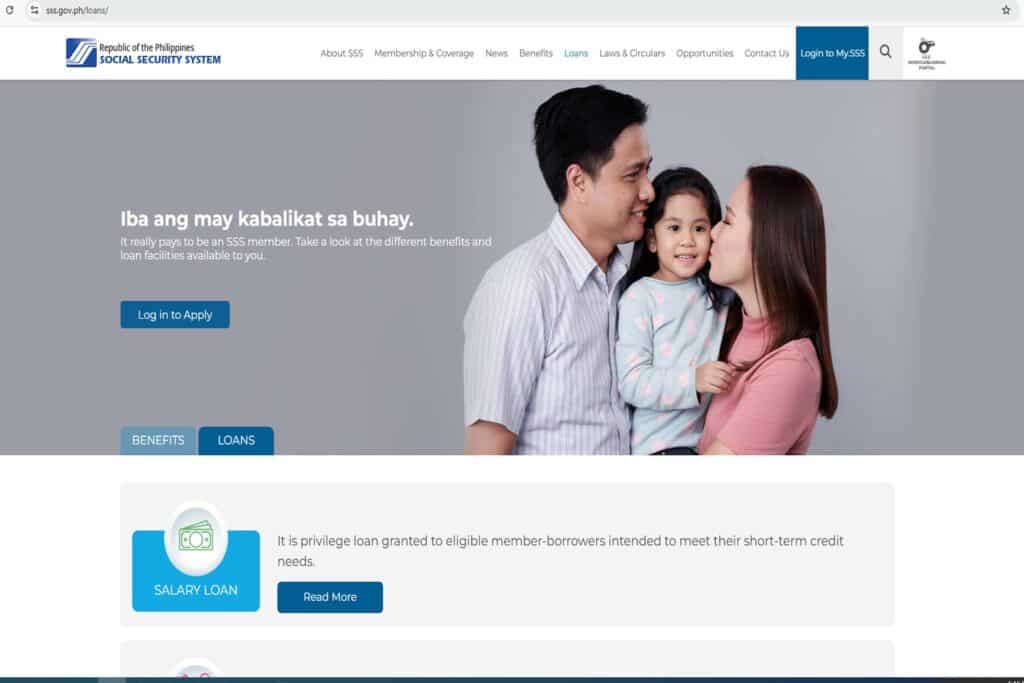
The SSS salary loan is a short-term cash program designed to assist private-sector employees, voluntary members, freelancers, and OFWs. In 2026, all SSS salary loan applications are processed online through the My.SSS portal—paper-based walk-in applications at SSS branches are no longer accepted.
1. Strict Contribution Qualifications & Calculation Rules
To qualify for an SSS salary loan, you must meet contribution thresholds based on your Monthly Salary Credit (MSC):
- One-Month Salary Loan: Requires at least 36 total monthly posted contributions prior to the semester of application. At least six (6) of these contributions must be posted within the last 12 months.
- Two-Month Salary Loan (Max ₱70,000): Requires at least 72 total monthly posted contributions prior to the semester of application, with at least six (6) posted within the last 12 months.
- Active Employment Status: Employed members must have an active employer who will endorse the loan application through their SSS Employer Portal. Self-employed, voluntary, and OFW members apply directly without employer endorsement.
- Clean Credit Standing: You must not have been convicted of fraud against the SSS, and your existing loan accounts (if any) must not be in default.
Track your monthly posted contributions using the updated SSS Contribution Table 2026. Regularly log in to Check SSS Contribution Online to ensure your employer is remitting your monthly salary deductions on time.
2. Disbursement Account Enrollment Module (DAEM) Setup
The SSS no longer disburses loan proceeds via physical paper checks. Before submitting your cash loan application, you must register a cash disbursement account in the Disbursement Account Enrollment Module (DAEM) inside your My.SSS account:
- Accepted Accounts: PESONet-participating bank accounts (e.g., BDO, BPI, Metrobank, LandBank), UMID-ATM cards, or accredited E-wallets (such as GCash or Maya).
- Proof of Account Document: You must upload a clear photo of your bank passbook, deposit slip, ATM card showing your account number, or a certified bank certificate. The account name must match your registered SSS name exactly.
- Verification Timeline: DAEM approval takes 1 to 3 working days. Submit your loan application only after receiving DAEM confirmation via SMS or email.
3. Step-by-Step SSS Online Loan Application Process
- Access your portal using our SSS Online Login Philippines guide.
- Navigate to the E-Services tab and select Apply for Salary Loan.
- Select your desired loan amount (One-Month or Two-Month Salary Credit) and choose your approved DAEM disbursement bank account.
- Review the terms, interest rates (10% p.a. computed on a diminishing balance), and 1% service fee deduction.
- Accept the Disclosure Statement and submit the application.
- If employed, notify your HR department immediately to log into their SSS Employer Portal and click “Certify” within fourteen (14) calendar days. Failure by your employer to certify within 14 days will cause the application to expire automatically.
For specialized paperwork and manual forms, consult our guide on SSS Salary Loan Requirements.
Phase 3: Pag-IBIG Multi-Purpose Loan (MPL) & Calamity Loan Blueprint
The Pag-IBIG Multi-Purpose Loan (MPL) is a short-term cash loan designed to provide financial relief for medical expenses, tuition fees, home repairs, or minor capital purchases. It offers an annual interest rate of 10.50%, making it an affordable alternative to high-interest commercial bank loans.
1. Eligibility & Maximum Borrowing Limit
- Contribution Requirement: You must have completed at least 24 monthly savings contributions under the Pag-IBIG Regular Savings program. At least one (1) contribution must have been posted within the last six (6) months prior to application.
- Borrowing Capacity: You can borrow up to 80% of your Total Accumulated Value (TAV), which includes your monthly employee contributions, employer counterpart contributions, and earned annual dividends.
- Repayment Term: Payable over 24 or 36 months, with a 2-month grace period before the first payment schedule begins.
2. Required Documents & Employer Attestation
When preparing your pag ibig loan form, gather the following physical and digital documents:
- Application Form: Download and complete the official multi purpose loan pag ibig form (HQP-SLF-065). Ensure your employer signs the “Employer’s Confirmation” section.
- Proof of Income: Employed members must attach a certified Certificate of Net Pay or one (1) month’s latest payslip. Self-employed members must attach an Income Tax Return (ITR), Audited Financial Statements, or an Affidavit of Income.
- Valid Identification: Submit one (1) clear photocopy of a valid primary government id with three specimen signatures.
3. Instant Disbursement via Pag-IBIG Loyalty Card Plus
While members can apply for an online loan via the Virtual Pag-IBIG portal, cash disbursement is routed directly to your cash card. To receive funds within 24 to 48 hours without branch visits, upgrade your account using our Pag-IBIG Loyalty Card Plus guide. Check your monthly limits using the Pag-IBIG Contribution Table 2026.
Phase 4: The 2026 Pag-IBIG Housing Loan Masterclass (₱10M Ceiling)
In response to rising real estate construction costs, the Pag-IBIG Fund officially increased its maximum housing loan ceiling from ₱6 Million to ₱10 Million. This expansion enables middle-income and high-earning Filipino workers to finance residential lots, house-and-lot packages, townhouses, and condominium units.
1. Updated Borrowing Ceilings & Income Ratio Requirements
Your approved housing loan amount is evaluated based on three strict criteria: your Actual Need, your Net Take-Home Pay, and the Loan-to-Value (LTV) ratio of the property:
- Capacity to Pay: Your monthly housing loan amortizations must not exceed 35% of your gross monthly income for loans up to ₱1.25 Million, or 30% of your gross monthly income for loans exceeding ₱1.25 Million.
- Loan-to-Value (LTV) Ratio: For residential properties purchasing up to ₱6 Million, Pag-IBIG finances up to 90% to 100% of the appraised value. For properties between ₱6 Million and ₱10 Million, LTV financing caps at 80% to 90%.
- Interest Rates: Offers competitive interest rates ranging from 5.75% (1-year fixing period) to 10.00% (30-year fixing period).
2. Complete Documentary Checklist for Housing Loans
To successfully file a housing application for loan, assemble these technical and financial records:
- Primary Application Form: Duly accomplished Pag-IBIG Housing Loan Application (HLA) Form with recent 1×1 ID photos of the principal borrower and co-borrower.
- Proof of Income:
- Employed Members: Notarized Certificate of Employment and Compensation (CEC), latest 3 months’ payslips, and latest ITR (Form 2316).
- Self-Employed Members: ITR (Form 1701), Audited Financial Statements, Official Receipts, and DTI/SEC Business Registration.
- OFW Members: Special Power of Attorney (SPA) notarized prior to departure or Apostilled by the Philippine Embassy, active Employment Contract authenticated by the MWO/POEA, and latest 3 months’ proof of remittance.
- Technical Property Documents: Certified True Copy of Transfer Certificate of Title (TCT/CCT) from the Registry of Deeds, updated Tax Declaration and Tax Clearance, Location Plan and Vicinity Map signed by a licensed Geodetic Engineer, and Building Plans/Bill of Materials for construction loans.
To master the filing process, review our complete Pag-IBIG Housing Loan Requirements manual. Create your digital portal footprint via the Pag-IBIG Online Registration system and manage your profile using the Pag-IBIG MDF Form.
3. The Expanded 4PH Socialized Housing Loan Program (3% Interest)
Under the Pambansang Pabahay Para sa Pilipino (4PH) program, low-income earners and minimum-wage workers can access subsidized housing loans up to ₱850,000 at a fixed interest rate of 3.00% per annum for the first five (5) years of repayment. Monthly amortizations under this subsidized program can be as low as ₱2,500 per month.
Phase 5: GSIS Emergency, Salary & Conso-Loans for Public Servants
If you are an active civil servant, teacher, military personnel, or government employee, the Government Service Insurance System (GSIS) offers specialized credit lines that feature lower interest rates and longer repayment windows than private bank loans.
1. GSIS Conso-Loan Plus
The GSIS Consolidated Loan (Conso-Loan) merges various public-sector credit products—such as Salary Loans, Restructured Loans, and Emergency Loans—into a single payment plan:
- Borrowing Limits: Active members with at least 25 years of paid premiums can borrow up to 14 times their basic monthly salary (up to a maximum ceiling of ₱1.5 Million). Members with 2 to 5 years of premiums can borrow up to 3 times their basic monthly salary.
- Repayment Window: Extended up to ten (10) years, with amortizations deducted directly from monthly government payroll.
2. GSIS Touch App & GWAPS Kiosk Processing
Government personnel no longer need to complete manual paper forms at GSIS regional windows. Applications are submitted digitally via the official GSIS Touch mobile app or through biometric GWAPS Kiosks stationed in major provincial capitols, city halls, and regional offices. Ensure your profile is active by consulting our GSIS UMID eCard Requirements Philippines 2026 guide.
Phase 6: Employment, Background Checks & Financial Hygiene
When applying for high-value mortgages or commercial loan online ph products, state evaluators and private real estate developers conduct background checks to assess your default risk.
1. Pre-Employment Background Clearances
Your financial borrowing footprint begins the day you enter the workforce. Properly completing your First Time Job Requirements ensures your employer remits your mandatory benefits without delay. Additionally, developers evaluate background records using standard state clearances:
- Barangay ID & Certificate of Residency
- Community Tax Certificate (Cedula)
- NBI Clearance and National Police Clearance
- Voter’s ID / Registration Record
2. Health Security & Medical Coverage
A sudden medical emergency is the leading cause of loan defaults in the Philippines. To protect your financial security, keep your PhilHealth contributions active:
- Understand your rate bracket using the PhilHealth Contribution Table 2026.
- Establish digital portal access via our PhilHealth Online Registration guide.
- Verify all general PhilHealth Requirements and keep an updated PhilHealth MDR Form attached to your family health folder.
Phase 7: Long-Term Professional & Retirement Lifecycle
Maintaining active professional credentials and keeping your state records updated guarantees that your loan proceeds, insurance claims, and retirement benefits are processed without delay.
1. Professional Licensing & Mobility Records
Maintain your earning capacity by keeping your professional credentials current. Review the PRC ID Renewal Online process, preserve your Civil Service Eligibility, and manage your driving privileges using our LTO Student Permit and Driver’s License Requirements guides.
2. Specialized Family & Deployment Requirements
- OFW Deployment Protections: Overseas workers applying for housing loans while working abroad must fulfill all OFW Document Requirements prior to departure.
- Targeted Demographic Benefits: Single parents and senior citizens enjoy dedicated statutory discounts and credit preferences. Secure your status using our Solo Parent ID and Senior Citizen ID guides.
- Maternity & Retirement Claims: Claim cash allowances by mastering the SSS Maternity Benefit Requirements. As your career concludes, navigate your SSS Retirement and SSS Pension filings seamlessly.
- Civil Registry Settlement: In the event of a family tragedy, securing survival pensions requires proper documentation. Consult our Death Certificate Requirements guide to process claims without delay.
Frequently Asked Questions (FAQs)
1. Can I apply for an SSS salary loan and a Pag-IBIG multi-purpose loan at the same time?
Yes. The Social Security System and the Pag-IBIG Fund are independent government agencies. As long as you meet the minimum contribution requirements for both agencies (36 contributions for SSS and 24 contributions for Pag-IBIG), you can maintain active loans with both programs simultaneously.
2. What happens if my employer fails to remit my salary loan deductions?
Under SSS and Pag-IBIG regulations, employers are legally required to deduct loan amortizations from your monthly salary and remit them to the respective agencies. If your employer fails to remit these payments, they will face statutory penalties and interest charges. Always log into your My.SSS or Virtual Pag-IBIG account regularly to verify that your loan payments are being posted.
3. How long does it take to receive loan proceeds after online submission?
For SSS Salary Loans submitted online with an approved DAEM bank account and prompt employer certification, funds are disbursed within 3 to 5 working days. For Pag-IBIG Multi-Purpose Loans disbursed via the Pag-IBIG Loyalty Card Plus, processing takes 2 to 4 working days. Pag-IBIG Housing Loans require 15 to 30 working days for full processing and takeout upon submission of complete property documents.
4. Can I apply for a government loan if I am currently unemployed or voluntary?
Voluntary, self-employed, and OFW members can apply for SSS Salary Loans and Pag-IBIG Multi-Purpose Loans without an employer, provided they meet the minimum posted contribution requirements and have at least six (6) contributions posted within the last 12 months. However, housing loans require proof of active income capacity (e.g., ITR, audited financial statements, or foreign employment contracts).
WARNING: Beware of “Online Loan Fixers” and Fraudulent Lending Apps
As the premier authority on government compliance, **REQUIREMENTS PH** issues a severe warning regarding black-market scams operating across social media platforms like Facebook, TikTok, and unofficial messaging apps.
Because government loan approvals are digitized, illegal syndicates advertise services such as: “Rush SSS / Pag-IBIG Loan Approval! No monthly contributions required. 100% guaranteed approval in 24 hours. Just send your portal password, OTP, and a 20% processing fee via GCash.”
This is a dangerous trap. Do not engage with fixers or share your portal passwords.
These syndicates commit digital identity theft. If you provide them with your portal login credentials, OTPs, or cash card details, they will submit fraudulent loan applications under your name, redirect the cash proceeds to their own dummy bank accounts, and disappear. You will remain legally obligated to pay off the fraudulent debt through automatic salary deductions or pension offsets for years.
Furthermore, avoid illegal philippines online lending apps that promise a loan fast or an easy loan without identity verification. These predatory apps often charge illegal interest rates exceeding 30% per month, engage in harassment, and violate privacy laws. Always process your loan online transactions directly through official .gov.ph portals.
⚠ Important Regulatory Notice and Disclaimer
This Government Loan Requirements Philippines 2026 masterclass guide is independently researched and published by REQUIREMENTS PH to assist the public with administrative credit procedures. We are NOT affiliated, associated, authorized, endorsed by, or in any way officially connected with the Social Security System (SSS), the Pag-IBIG Fund (HDMF), the GSIS, or any government agency.
While we update our content regularly to reflect current fiscal guidelines, interest rates, contribution minimums, and loan ceilings, specific administrative policies are subject to change based on official agency circulars. To read the official legal texts regarding state benefit implementations and housing policies, consult the Official Gazette of the Republic of the Philippines. For official account access or to submit a loan application, visit the official My.SSS, Virtual Pag-IBIG, or GSIS Touch portals directly.
Explore Related Government & Financial Master Guides
Ensure your complete public employment and identity portfolio is bulletproof by exploring our other detailed step-by-step master guides from REQUIREMENTS PH:
- SSS Salary Loan Online Application Guide 2026
- Pag-IBIG Housing Loan Requirements Master Guide 2026
- Pag-IBIG Loyalty Card Plus Requirements and Application Guide
- Complete Government ID Requirements Philippines 2026 Roadmap
- GSIS UMID eCard Requirements and Application Guide
- OFW Document Requirements Philippines 2026 Pre-Deployment Guide
About the Editorial Team
The REQUIREMENTS PH Research Team comprises dedicated civic procedure writers and administrative researchers in the Philippines. We audit state agency circulars, review portal updates, and synthesize real-world applicant experiences to clarify updates regarding the Government Loan Requirements Philippines 2026 for every Filipino working toward financial security.