
Complete Police Clearance Requirements Philippines 2026 (Fast & Hassle-Free Guide)
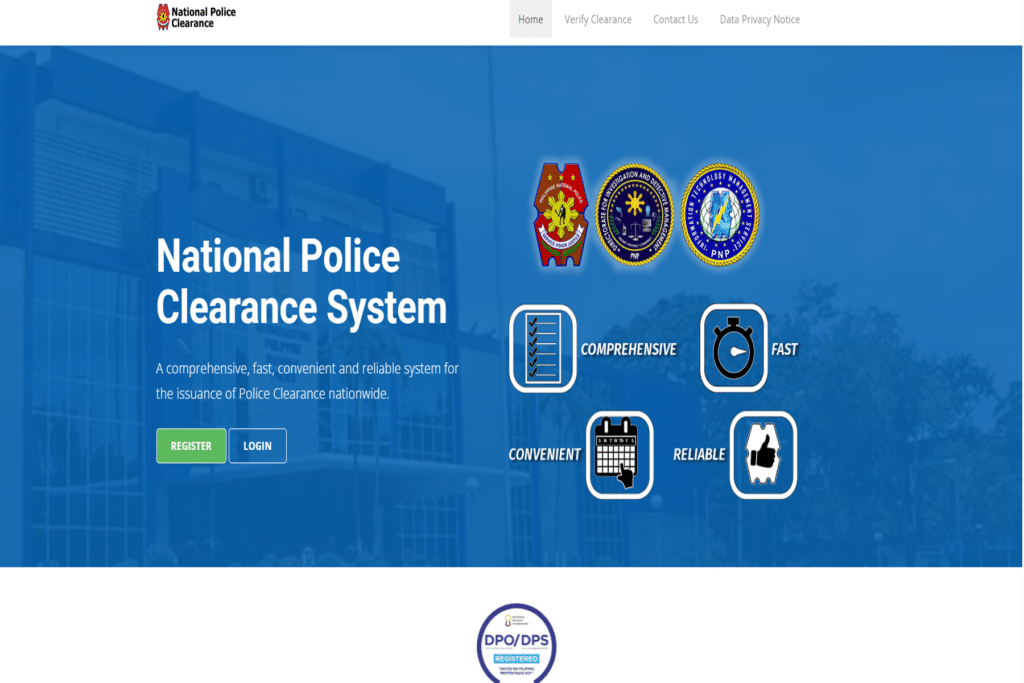
If you have ever stood in a long, humid line at a local precinct only to be told at the releasing window that your identification isn’t “valid enough,” you know the absolute frustration of Philippine bureaucracy. Securing your Police Clearance Requirements Philippines does not have to be a trial by fire. With the full implementation of the National Police Clearance System (NPCS) in 2026, the process is heavily digitized and faster than ever—if you know the right shortcuts.
Whether you are a fresh graduate taking advantage of the First Time Job Seekers Act, an Overseas Filipino Worker (OFW) renewing your travel papers, or a corporate employee switching careers, this pillar guide is your ultimate roadmap. We have audited the latest 2026 PNP protocols to ensure you do not waste time, money, or effort on return trips. From navigating the police clearance online application portal to legally handling the dreaded “HIT” status, here is everything you need to know to get approved in a single day.
Local vs. National Police Clearance: Which Do You Actually Need?
A massive mistake many applicants make is confusing the traditional “Local” Police Clearance with the modernized “National” version. Prior to the recent system upgrades, you could get a clearance specifically for use within your own municipality. However, as of 2026, corporate employers, banks, and major government agencies (like the DFA for passports) strictly require the National Police Clearance (NPC).
The NPC is linked to a centralized, nationwide database. This means even if you apply at a station in the City of Santa Rosa or Cebu, the system thoroughly checks for any criminal records or pending blotter cases across all 17 regions of the Philippines. It is a highly respected primary ID alternative because it utilizes live biometric verification. Unless your barangay specifically requests a local version for a minor village transaction, always secure the National Police Clearance.
The 2026 Master List of Police Clearance Requirements Philippines
The Philippine National Police (PNP) follows a very strict “Two-ID Rule” to combat identity theft. If the name on your valid ID does not perfectly match the information you entered online, the station encoder will reject your application on the spot. Here are the exact documents you must physically bring to your appointment.
Primary Valid IDs (Bring at least TWO)
You must present the original copies (no photocopies) of two unexpired primary IDs. Accepted documents include:
- Philippine Identification (PhilSys) / ePhilID: The absolute gold standard for 2026. The PNP system is tightly integrated with the national ID database.
- Valid Philippine Passport: Ensure it has at least 6 months of validity remaining. Check our Passport Requirements Guide if you need to renew yours.
- Driver’s License: Issued by the Land Transportation Office (LTO). Temporary paper licenses are only accepted if accompanied by the official receipt (OR).
- UMID Card: The Unified Multi-Purpose ID from SSS or GSIS.
- PRC License: For registered board professionals.
Secondary IDs (If you lack Primary IDs)
If your wallet is empty of primary documents, the Police Clearance Requirements Philippines guidelines allow you to present ONE primary ID supported by ONE of the following secondary documents:
- PSA Birth Certificate: Must be original and printed on Security Paper (SECPA). See how to get one via our PSA Birth Certificate Guide.
- TIN ID: The official digitized card from the Bureau of Internal Revenue.
- PhilHealth ID: The laminated cardboard version or the PVC ID.
- Postal ID: The modernized PVC version.
Pro-Tip for Fast Verification: Avoid presenting your Barangay ID or Company ID as your main requirement. While they might work for some local transactions, the NPCS verification officers often flag them as “Low-Level Security” documents, which can lead to unnecessary questioning or delays.
Step-by-Step Police Clearance Online Application Process
Gone are the days of manual, handwritten forms. To complete your Police Clearance Requirements Philippines, you must initiate the process digitally. Walk-ins without an online appointment are strictly prohibited in major cities.
- Create an NPCS Account: Visit the official National Police Clearance System (NPCS) portal. Register using an active email address. Warning: Always double-check your spam folder for the activation link.
- Complete Your Profile: Fill out your personal background accurately. If your name differs from your IDs by even a single letter (e.g., “Ma.” vs. “Maria”), the station officer will ask you to cancel the appointment and pay again.
- Set Your Appointment: Select the Police Station most convenient for you. You do not have to pick the station in your hometown; you can choose the one nearest your office. Select your preferred date and time (AM or PM).
- Secure Your Payment: The standard clearance fee is ₱150.00. You can pay this securely via LandBank Link.BizPortal using GCash, Maya, or direct online banking. Crucial Step: Always screenshot or print your generated Reference Number and Official Receipt.
First Time Job Seekers: How to Get Your Clearance for FREE
If you are a fresh graduate entering the workforce, you can bypass the ₱150 fee entirely. Under Republic Act 11261 (First Time Job Seekers Assistance Act), you are legally exempted from paying government fees for pre-employment documents.
To claim this exemption, you cannot simply tell the police officer it is your first job. You must secure a First Time Job Seeker Certificate from your local Barangay Captain. When registering on the NPCS online portal, check the box indicating you are a first-time applicant to waive the fee. During your appointment, present the original barangay certificate alongside your valid IDs. Read our full First Time Job Requirements Philippines guide for more details on this law.
Troubleshooting: What to Do If You Get a “HIT” Status
One of the most anxiety-inducing parts of fulfilling your Police Clearance Requirements Philippines is finishing your biometrics, approaching the releasing window, and being told by the officer, “May HIT ka.”
Do not panic. A “HIT” does not automatically mean you are a criminal. It simply means the national database detected a person with the exact same name as yours who has a derogatory record or a pending court case. Because the Philippines has millions of citizens with common names (like Juan Dela Cruz or Maria Santos), namesakes are incredibly common.
How to Clear Your Police “HIT”:
- Manual Verification: The officer will hold your application and ask you to return after a few days (usually 3 to 5 working days). During this time, the PNP will manually cross-reference your fingerprints and photo with the suspect’s file. If it is just a namesake, your clearance will be printed upon your return.
- Affidavit of Denial: If the namesake issue is persistent, you may be asked to submit a notarized Affidavit of Denial stating that you are not the person involved in the specific criminal case.
- Court Clearance: If the record actually belongs to you from a past issue that has already been resolved, you must present an original Certificate of Finality or Court Dismissal Order to prove the case is closed.
Police Clearance vs. NBI Clearance: A 2026 Comparison
Why do HR departments sometimes require both? While they seem identical, they search entirely different databases.
| Feature | National Police Clearance (NPC) | NBI Clearance |
|---|---|---|
| Issuing Agency | Philippine National Police (PNP) | National Bureau of Investigation |
| Primary Database | Police blotters, local warrants, localized incidents | High-level court cases, national criminal records, civil cases |
| Best Used For | Local employment, secondary ID verification | Visas, international travel, civil service requirements |
| Standard Validity | Six (6) Months | Six (6) Months to One (1) Year |
If you also need to secure the latter, check out our comprehensive NBI Clearance Requirements Guide.
Dress Code and Branch Etiquette
To avoid a massive headache at the station, you must observe the strict PNP dress code. The photograph taken during your biometrics will be permanently printed on your clearance, which you will hand to your future employer.
- Remove Accessories: You will be asked to remove your earrings, necklaces, eyeglasses, and colored contact lenses before the digital photo capture.
⚠ Important Notice & Disclaimer
RequirementPH (or GabayPinoyPH) is an independent, privately-run educational platform dedicated to streamlining the Police Clearance Requirements Philippines for the general public. We are NOT affiliated, associated, authorized, endorsed by, or officially connected with the Philippine National Police (PNP) or any specific local government unit.
While we research diligently to provide accurate troubleshooting steps, the exact ID acceptance rules and portal interface updates are subject to change based on official PNP directives. For the most secure registration, resolving locked accounts, and verifying official fee schedules, please visit the official NPCS portal directly at https://pnpclearance.ph or review the legal framework of the First Time Job Seekers Act via the Official Gazette.
Expand Your ID Portfolio
Do you need to complete the rest of your pre-employment documentation? Use our master guides below to process your papers faster:
- Complete SSS Requirements Philippines 2026
- PhilHealth ID Requirements & Registration Guide
- Ultimate Valid ID Requirements Philippines Official List
About the Editorial Team
Our research team specializes in Philippine document procurement. We combine official government directives with real-world user feedback to provide the most accurate, hassle-free guides possible for job seekers, taxpayers, and travelers.