
Complete PhilHealth ID Requirements in the Philippines 2026 (Ultimate Guide)
Whether you are starting your very first corporate job, transitioning to remote freelance work, or preparing for an upcoming medical procedure, securing your health insurance should be at the absolute top of your priority list. But before you can claim those essential hospital billing deductions, you need to navigate the PhilHealth ID requirements in the Philippines.
For many Filipinos, dealing with the Philippine government brings to mind long queues, confusing forms, and the dreaded “come back tomorrow” from the teller because of a missing photocopy. The good news? The Philippine Health Insurance Corporation (PhilHealth) has significantly streamlined its process over the last few years.
Based on our experience helping thousands of applicants organize their government documents, this 2026 pillar guide will serve as your ultimate roadmap. We will break down the exact PhilHealth ID requirements in the Philippines, explain why this card serves as a powerful identity card, discuss the difference between the standard cardboard and PVC IDs, and give you insider tips to ensure your application takes minutes instead of hours.
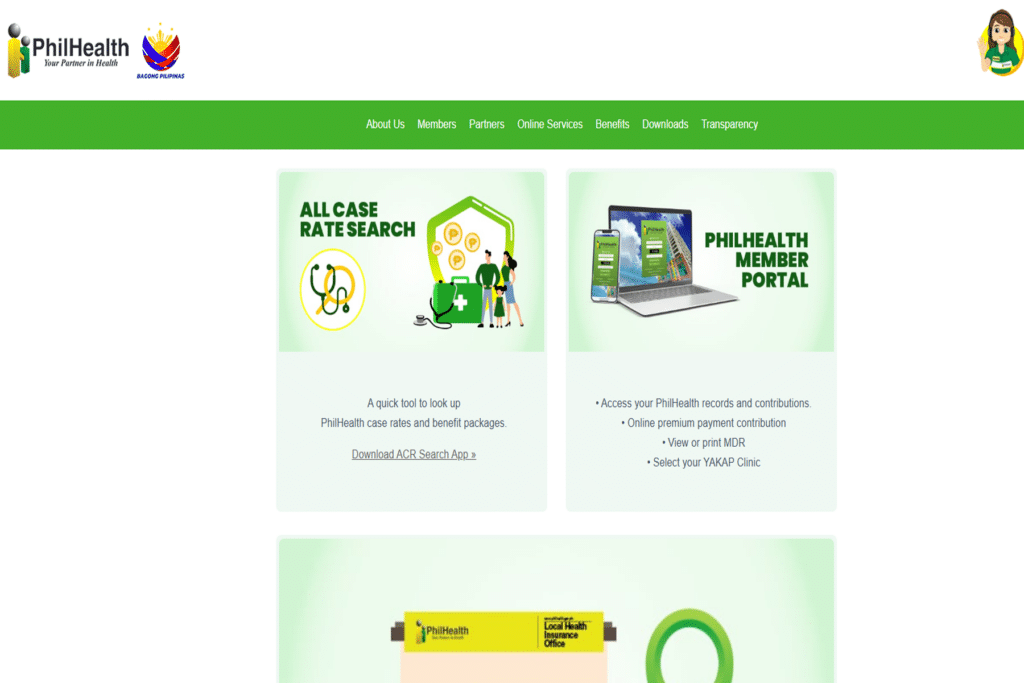
What is a PhilHealth ID and Why Do You Absolutely Need It?
Before gathering your PhilHealth ID requirements in the Philippines, it is important to understand the fundamental difference between a PhilHealth Number (PIN) and the actual physical ID card.
When you register, you are assigned a unique, lifetime 12-digit PhilHealth Identification Number (PIN). This number is what hospitals use to verify your active contributions. The PhilHealth ID is the physical proof of that specific number.
You need this physical ID for two main reasons:
- Medical Emergencies and Confinement: When you or your declared dependents are hospitalized, the billing department will immediately ask for your PhilHealth ID and Member Data Record (MDR) to deduct your legal benefits from the total hospital bill. Without it, you will be forced to pay completely out of pocket.
- Valid Government Identification: While the standard paper PhilHealth ID is classified as a secondary ID, it is a highly trusted form of government identification. It is widely accepted by commercial banks, remittance centers, and agencies when applying for a police clearance or gathering your student permit requirements.
Core PhilHealth ID Requirements in the Philippines
The beauty of applying for this specific government document is that the baseline requirements are very simple. To seamlessly process your application, you must physically prepare the following core PhilHealth ID requirements in the Philippines:
1. Two (2) Copies of the PMRF
The PMRF stands for the PhilHealth Member Registration Form. This is the official document where you declare your personal details, income bracket, and legal dependents.
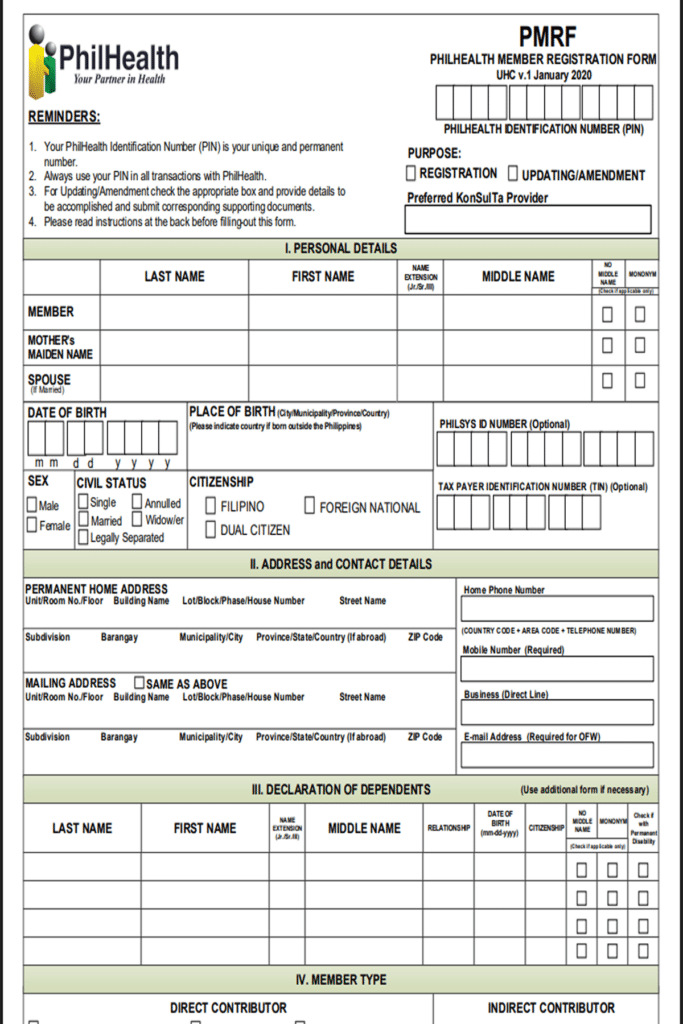
Applicant Tip: Do not wait until you are at the branch to fill this out. You can download the latest PMRF directly from the official PhilHealth website. Print two copies, fill them out in capital letters using a black ballpen, and leave the “PhilHealth Number” blank if this is your first time applying.
2. Two (2) 1×1 ID Pictures
You need recent 1×1 ID photos taken within the last six months. They must have a white background. Do not use selfies or heavily filtered photos, as the evaluator will permanently attach one of these directly to your printed ID.
3. Two (2) Valid IDs (Original and Photocopy)
You need to prove your identity to the evaluator. Bring the original versions of your IDs and provide at least one photocopy. Accepted forms of valid id include:
- PSA Birth Certificate (Highly recommended for fresh graduates and first-time applicants)
- Philippine Passport
- Driver’s License
- UMID / SSS ID
- PhilSys National ID (Physical card or printed ePhilID)
- Postal ID
- Voter’s ID or Certification
Additional Requirements Based on Your Membership Category
Your employment status actively changes exactly what paperwork you need to submit. To avoid getting rejected at the window, make sure you bring the specific PhilHealth ID requirements in the Philippines that match your current life situation.
For Formal Economy (Employed Workers)
If you just got hired by a company, your HR department usually handles your PhilHealth registration. However, if they require you to get the number and ID yourself, you will need to bring:
- A Certificate of Employment (COE) or a copy of your signed company contract.
- Your Company ID (if already issued).
For Informal Economy (Freelancers, Self-Employed, Online Sellers)
With the rise of remote work, millions of Filipinos now fall under the “Voluntary” or “Informal Economy” bracket. If you are your own boss, you must prove your source of income so PhilHealth can accurately compute your monthly contribution.
- If you have a registered business: DTI Registration or Mayor’s Permit.
- If you are a freelancer: A copy of a recent client contract, an Upwork/Fiverr earning certificate, or an Affidavit of Income.
For Overseas Filipino Workers (OFWs)
OFWs are legally mandated to have active PhilHealth contributions before they can secure their Overseas Employment Certificate (OEC). Your specific PhilHealth ID requirements in the Philippines include:
- A copy of your valid Passport.
- Working Visa or Re-entry permit.
- Valid Overseas Employment Certificate (OEC) or POEA contract.
For Senior Citizens
Under the Expanded Senior Citizens Act, Filipinos aged 60 and above are automatically covered by PhilHealth, even if they never paid a single contribution in their youth. They simply need to register to get their ID.
- A photocopy of their OSCA (Office of the Senior Citizen Affairs) ID.
- If no OSCA ID is available, any valid government ID showing their date of birth (like a Senior Citizen Voter’s ID or Passport).
How to Declare Dependents (Spouse, Children, Parents)
One of the greatest benefits of PhilHealth is that your active contributions can cover your immediate family members without any extra monthly cost. However, they must be legally declared on your PMRF and printed on your Member Data Record (MDR).
To declare dependents, add these to your PhilHealth ID requirements in the Philippines:
- For your legal spouse: Photocopy of your PSA Marriage Certificate.
- For children (20 years old and below): Photocopy of their PSA Birth Certificates.
- For parents (60 years old and above): Photocopy of your PSA Birth Certificate (to prove they are your parents) and a photocopy of their Senior Citizen IDs.
Real Applicant Tip: The “No Erasures” Rule
PhilHealth evaluators are incredibly strict about the PMRF. If you make a mistake while writing, do not use correction tape or cross it out. They will instantly reject the form. Print extra copies at home just in case you make a spelling error.
Step-by-Step Guide: How to Apply for Your PhilHealth ID
Once you have all your PhilHealth ID requirements in the Philippines compiled in a secure envelope, you are ready to visit a branch. Here is exactly what will happen when you arrive.
Step 1: Choose the Right PhilHealth Office
You can apply at any Local Health Insurance Office (LHIO) or a “PhilHealth Express” booth located inside major malls (like SM or Robinsons). Mall branches are highly recommended because they are air-conditioned, generally have faster queues, and are open on weekends in some areas.
Step 2: Get a Queue Number and Verification
Approach the guard or the public assistance desk. Tell them you are a new applicant or you want to print your ID. They will check your forms to ensure you have complete PhilHealth ID requirements in the Philippines before handing you a queue number.
Step 3: Submit Your Documents
Wait for your number to be called. Hand your PMRF, 1×1 photos, and photocopies to the evaluator. They will encode your data into the national system. This usually takes about 5 to 10 minutes. If everything is correct, they will generate your lifetime PhilHealth Identification Number (PIN).
Step 4: Pay Your Initial Contribution (For Voluntary Members)
If you applied as a self-employed individual or freelancer, you will be directed to the cashier to pay your first premium contribution (usually ranging from ₱500 to ₱1,000 depending on your declared income bracket). If you are formally employed, you skip this step as your employer handles the payment.
Step 5: Claim Your ID and MDR
Return to the releasing window. The staff will hand you your printed Member Data Record (MDR) and your standard PhilHealth ID card. You must sign the ID and attach your 1×1 photo immediately.
The Great Debate: Regular Cardboard ID vs. PVC ID
One of the most confusing aspects of the PhilHealth ID requirements in the Philippines is the type of card you get. Let’s clear the air on this issue so you know what to expect.
The Standard ID (Paper/Cardboard)
This is the default ID given to 90% of applicants. It is made of sturdy paper. It is absolutely FREE. It requires you to paste your own 1×1 photo and sign it. Once you laminate it, it serves as an excellent supporting ID if you are preparing your passport requirements or gathering your student permit requirements for the LTO.
The Digitized PVC ID (PhilHealth Insurance ID Card)
This is a plastic card similar to a driver’s license. It is fully digitized with your photo directly printed on the plastic.
The Reality: Over the past few years, the issuance of the PVC card has been frequently suspended or limited to specific members (like OFWs and formally employed individuals). Furthermore, the PVC card is usually NOT free; it often requires a fee of around ₱90 to ₱150, and you must declare it at specific branches that have the PVC printing machines. Do not stress if you only receive the cardboard version—it holds the exact same legal power as the plastic one during medical emergencies.
Frequently Asked Questions (FAQs)
Does the PhilHealth ID expire?
No. Your PhilHealth ID and your 12-digit PIN are yours for life. You only need to request a new card if your old one is lost, damaged, or if you legally changed your name.
Can I use my PhilHealth ID to apply for a DFA Passport?
The Department of Foreign Affairs (DFA) is very strict when verifying your passport requirements. While they accept the digitized PVC PhilHealth ID, they generally do not accept the standard laminated cardboard ID as a primary document for new applications or a passport renewal. For passports, stick to your PSA Birth Certificate, UMID, or Driver’s License.
I lost my ID. What do I do?
If you misplaced your card, you do not need to register again. Simply execute an Affidavit of Loss (notarized by a lawyer), bring a valid id, and fill out a new PMRF requesting a replacement ID at any PhilHealth branch. They will print a new cardboard ID for free.
Can a representative claim my PhilHealth ID?
Yes. If you are bedridden, working abroad, or simply too busy, a representative can process it for you. They must bring an Authorization Letter signed by you, your original valid ID, their original valid ID, and your complete PMRF.
⚠ Important Notice & Disclaimer
RequirementsPH is an independent educational platform created to help Filipinos understand and complete government document requirements faster. We provide updated, accurate steps to assist users with applications, renewals, and legal requirements.
This website is not affiliated with, endorsed by, or officially connected to the Philippine Health Insurance Corporation (PhilHealth) or any Philippine government agency.
For official announcements, to download the latest PMRF, or to check your contribution records securely online, please transact directly through the official government portal:
Expand Your Government ID Portfolio
A PhilHealth ID is a fantastic start, but you will need stronger primary IDs for advanced transactions. Check out our other definitive guides to complete your wallet:
- Complete First Time Job Requirements Philippines Guide
- NBI Clearance Online Registration Guide
- SSS Requirements and Registration Guide
About the Author & Research Team
The RequirementsPH Editorial Team is dedicated to simplifying complex Philippine government processes. By combining official data with real-world application experiences, we provide easy-to-follow, actionable guides for every Filipino preparing for employment, medical needs, and travel.