
Essential SSS Maternity Benefit Requirements Philippines 2026 (Guaranteed Complete Guide)
Entering the beautiful phase of motherhood pregnancy is one of the most exciting milestones for any woman. However, preparing for the financial costs of childbirth requires strict administrative planning. If you are a working Filipina planning to get pregnant or currently navigating your pregnancy journey, securing your financial safety net through the Social Security System (SSS) should be your top priority.
The Philippines offers one of the most comprehensive maternal welfare programs in Southeast Asia. Whether you are an employed corporate worker, an OFW, or a self-employed freelancer, you are entitled to substantial maternity leave benefits. But how exactly do you process your maternity application? What happens if you experience an unexpected emergency, and what specific SSS Maternity Benefit Requirements Philippines 2026 documents must you submit to avoid delayed maternity leave payments?
In this guaranteed complete guide by GabayPinoyPH and REQUIREMENTS PH, we will walk you through the updated 2026 digital filing process via the My.SSS portal. We will cover everything from your initial pregnancy checks to filing your online mat 2 form, ensuring that you receive your full pregnancy paid leave without the hassle.
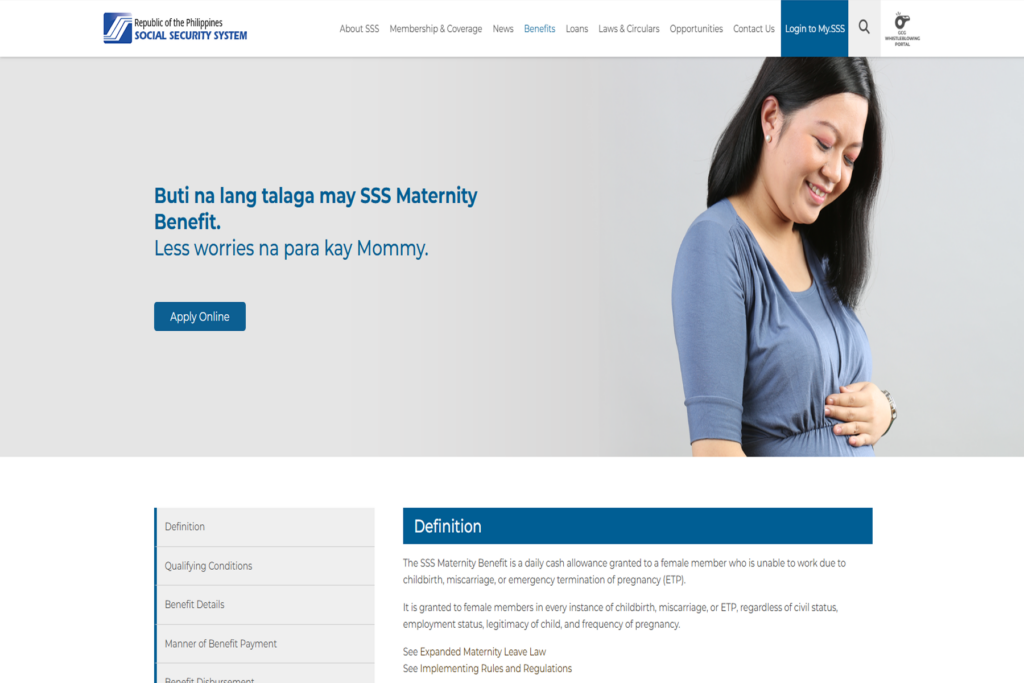
Understanding the Expanded Maternity Leave Law (RA 11210)
Under Republic Act No. 11210, also known as the Expanded Maternity Leave Law, the rights and welfare of working mothers in the Philippines have been significantly strengthened. All eligible female workers are entitled to a robust pregnancy leave package, regardless of their civil status, employment sector, or the legitimacy of the child.
Here is the breakdown of the approved maternity leave durations for 2026:
- 105 Days Paid Leave: Granted for every instance of a live birth (whether via normal delivery or cesarean section).
- 120 Days Paid Leave: Solo pregnant mothers are granted an additional 15 days of paid mat leave (totaling 120 days) provided they possess a valid Solo Parent ID or LGU certification.
- 60 Days Paid Leave: In the unfortunate event of a miscarriage or emergency termination of pregnancy (ETP), including stillbirths, the member is entitled to 60 days of recovery leave.
Core Eligibility: Do You Qualify for Maternity Benefits?
Before gathering your maternity leave form documents, you must first confirm if you meet the baseline SSS contribution criteria. The SSS strictly enforces the “3-Month Qualifying Rule.”
To qualify, a female member must have paid at least three (3) monthly SSS contributions within the 12-month period immediately preceding the semester of her childbirth, miscarriage, or ETP. The SSS only considers contributions paid *prior* to the semester of the contingency.
Example Scenario: If you are scheduled to give birth in June 2026, the “semester of contingency” is from January to June 2026. The 12-month qualifying period counted backward would be from January 2025 to December 2025. You must have at least three posted contributions within that specific 12-month window to be eligible for maternity benefits.
Step 1: The Maternity Notification Process (MAT 1)
If you are pregnant how will you know when to notify the SSS? The rule of thumb is to notify your employer (or the SSS directly, if self-employed) at least 60 days before your expected delivery date. Filing your Maternity Notification (formerly known as the MAT 1 form) early is a strict prerequisite.
Required Notification Documents:
You must submit medical proof to support your pregnancy application notification. Acceptable diagnostic documents signed by a physician include:
- A maternity ultrasound report.
- Blood Pregnancy test results (Beta HCG).
- Early Pregnancy factor test.
Employed members must submit these to their HR department, who will then transmit the notification through their My.SSS Employer portal. Self-employed, voluntary, and OFW members must submit their notification directly via their My.SSS Member Portal or through the SSS Mobile App.
Step 2: Filing the Maternity Benefit Claim (MAT 2 Form)
After giving birth or experiencing a contingency, you must proceed to the actual claiming phase. Historically known as filing the mat 2 form sss, this is now officially called the Maternity Benefit Application (MBA) for direct filers, or Maternity Benefit Reimbursement Application (MBRA) for employers. In 2026, standard mat 2 form claims are filed entirely online via the My.SSS portal.
SSS Maternity Benefit Requirements Philippines 2026 Checklist:
Ensure you have scanned copies or clear photos (under 2MB file size) of the following post-delivery documents:
- For Live Childbirth: A certified true copy of your child’s live birth certificate registered with the Local Civil Registrar (LCR) if filed within six months from delivery, complete with the Official Receipt (OR). If filed beyond six months, a PSA-issued Certificate of Live Birth is required.
- For Miscarriage/ETP: Medical certificate, consultation record, or discharge summary detailing the pregnancy loss.
- For Solo Parents: A Valid Solo Parent ID or an LGU certification of eligibility.
- Valid Identification: One primary ID (like a Passport, UMID, or PhilSys ID) or two secondary IDs.
How Your Maternity Leave Pay is Computed
Your maternity leave pay is equivalent to 100% of your Average Daily Salary Credit (ADSC) multiplied by the approved number of leave days (105, 120, or 60).
The Computation Formula:
- Exclude the semester of contingency and count 12 months backward.
- Identify the six (6) highest Monthly Salary Credits (MSC) within that 12-month window and add them together.
- Divide the total by 180 days to determine your ADSC.
- Multiply the ADSC by 105 days (for a normal live birth).
Salary Differential Rule: If you are employed in the private sector, your employer is mandated by RA 11210 to pay the “salary differential.” This is the difference between your full regular basic pay and the computed SSS cash benefit, ensuring you do not lose income while on pregnancy leave benefits.
Bonus: Maternity Benefits PhilHealth Integration
Do not forget that aside from your SSS cash allowance, you must also utilize your maternity benefits philhealth coverage. PhilHealth offers the Maternity Care Package (MCP), which provides financial subsidies for hospital bills and professional fees if you deliver your baby in a PhilHealth-accredited facility. Ensure your PhilHealth contributions are updated concurrently with your SSS ledger.
⚠ Important Notice and Disclaimer
This guide is independently researched and published by REQUIREMENTS PH and GabayPinoyPH to assist working mothers with their administrative procedures. We are NOT affiliated, associated, authorized, endorsed by, or in any way officially connected with the Social Security System (SSS), PhilHealth, or any government entity.
While we update our content regularly based on the Expanded Maternity Leave Law (RA 11210) guidelines, digital portal workflows and DAEM enrollment policies are subject to change without prior notice. For official computations, claim status tracking, or sensitive transactions, please visit the official My.SSS Member Portal or consult the Official SSS Website directly.
Explore Related SSS & Government Guides
Prepare your foundational documents and explore other official benefits with our detailed step-by-step tutorials: