
Complete & Ultimate Annulment Requirements Philippines 2026 (Easy)
The Philippines remains the only country in the world, aside from the Vatican, that does not legally recognize absolute divorce. For Filipinos trapped in a fundamentally broken or abusive marriage, navigating the complete Annulment Requirements Philippines is the only legal pathway to regain their civil freedom.
Unlike a standard divorce which simply terminates a marriage, an annulment (or a Declaration of Nullity) is a highly complex judicial process. You must legally prove to a Family Court judge that your marriage was either legally flawed from the very beginning or that a psychological incapacity prevents you or your spouse from fulfilling standard marital obligations.
Many individuals severely underestimate the financial cost, the emotional toll, and the strict bureaucratic paperwork required for this legal battle. In 2026, the Office of the Solicitor General (OSG) and the local Family Courts enforce rigorous evidence standards to protect the institution of marriage.
Attempting to bypass the proper Annulment Requirements Philippines by acquiring fake court decrees from illegal fixers will result in immediate criminal prosecution for falsification of public documents. Furthermore, a fake annulment means any future marriages you enter will be considered bigamous and entirely void.
As the premier authority on Philippine civil and administrative workflows, RequirementPH has constructed this definitive, stress-free master blueprint. We will dissect the exact, chronological legal steps required to dissolve your marriage.
You will learn how to identify your legal grounds, gather your foundational PSA evidence, survive the mandatory psychological evaluations, and finally register your court decree to legally restore your single status.
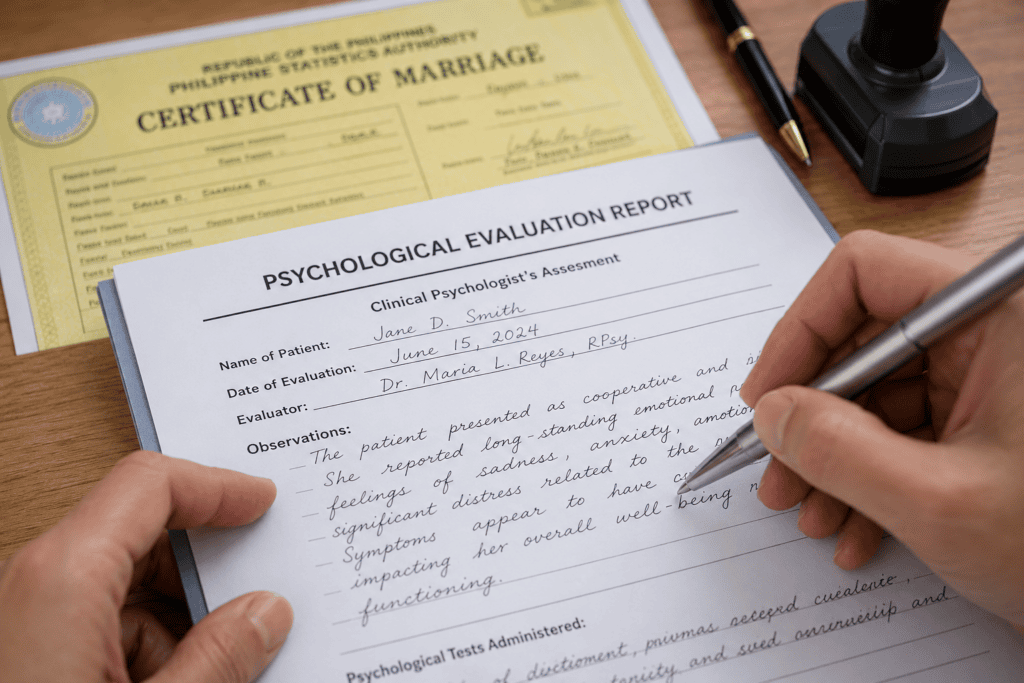
Phase 1: Establishing the Legal Grounds (Article 36 vs. Article 45)
Before gathering any paperwork for your Annulment Requirements Philippines, you must consult with a licensed family lawyer to determine your exact legal grounds. In the Philippines, you cannot simply dissolve a marriage due to “irreconcilable differences.”
You must file under one of two specific legal avenues provided by the Family Code of the Philippines: A Declaration of Nullity of Marriage (Article 36) or an Annulment of a Voidable Marriage (Article 45).
1. Declaration of Nullity (Psychological Incapacity)
This is the most common route used by Filipinos. Under Article 36, you must prove that either you or your spouse was psychologically incapacitated to comply with essential marital obligations at the time of the wedding.
This incapacity must be grave, deeply rooted in the person’s psychological history, and clinically incurable. Examples include severe personality disorders, chronic infidelity rooted in a psychological defect, or extreme physical abuse.
2. Annulment of a Voidable Marriage
Under Article 45, the marriage is considered valid until it is formally annulled by the court. The grounds for this are highly specific and time-sensitive.
These grounds include marrying between the ages of 18 and 21 without parental consent (as outlined in our Marriage License Requirements Philippines guide), cases of fraud, forced intimidation, or physical inability to consummate the marriage.
Phase 2: The Core Documentary Annulment Requirements Philippines
Once your lawyer establishes the legal grounds, you must compile an extensive dossier of civil registry documents. These documents serve as the foundation of your formal petition to the Regional Trial Court (RTC).
1. The PSA Marriage Certificate
You must secure a freshly printed, authenticated original copy of your PSA Marriage Certificate. This proves to the court that the marriage officially exists in the state registry.
If you cannot locate your records, you must request a centralized search. Review our Civil Registry Requirements Philippines guide to understand how to retrieve archived marital documents from the Philippine Statistics Authority.
2. PSA Birth Certificates of Children and Spouses
The court must protect the rights of any offspring produced during the union. You must submit the original PSA Birth Certificate Requirements Philippines for all common children.
Additionally, you must provide the PSA Birth Certificates of both the petitioner (you) and the respondent (your spouse) to establish exact legal identities and ages at the time of the wedding.
3. Barangay Certificate of Residency
You can only file a petition for annulment in the Family Court of the province or city where you or your spouse has resided for at least six (6) months prior to filing.
You must secure a Barangay Certificate of Residency. Ensure your municipal identification is updated by checking the Barangay ID Requirements Philippines to prevent jurisdictional dismissals by the judge.
Phase 3: The Psychological Evaluation (For Article 36 Petitions)
If you are filing under psychological incapacity, presenting civil documents is not enough. The most critical piece of evidence in your Annulment Requirements Philippines dossier is the expert psychological evaluation.
1. Hiring a Clinical Psychologist or Psychiatrist
Your lawyer will refer you to a court-accredited clinical psychologist or psychiatrist. You will undergo a series of intensive interviews, personality tests, and psychological profiling to trace the root cause of the marital failure.
The psychologist will also attempt to interview your spouse, your mutual friends, or your family members to build a comprehensive behavioral history. This independent medical report will be attached directly to your court petition.
2. The Expert Witness Testimony
Filing the written psychological report is only the first step. During the trial, your hired psychologist must take the witness stand as an expert witness.
They will be heavily cross-examined by the judge and the state prosecutor to defend their clinical findings. If the court finds the psychological evaluation weak or unconvincing, your annulment petition will be denied.
Phase 4: Filing the Petition and the Collusion Investigation
Once the petition is drafted and the psychological report is secured, your lawyer will officially file the case at the Regional Trial Court (RTC) designated as a Family Court. Filing the case triggers the judicial phase of the Annulment Requirements Philippines.
1. Summons and the Respondent’s Answer
The court will issue a “Summons” to your spouse (the respondent), requiring them to submit a formal answer to your allegations within 15 days. If your spouse cannot be located, the court will require you to publish the summons in a newspaper of general circulation.
2. The Mandatory Collusion Investigation
In the Philippines, an annulment cannot be granted if the husband and wife simply agree to separate. This is called “collusion,” and it is strictly prohibited by law.
The judge will order the public prosecutor to conduct a formal collusion investigation. The prosecutor will interview both parties to ensure that no secret agreement exists between you and your spouse to fabricate evidence. The trial cannot proceed without the prosecutor’s clearance report.
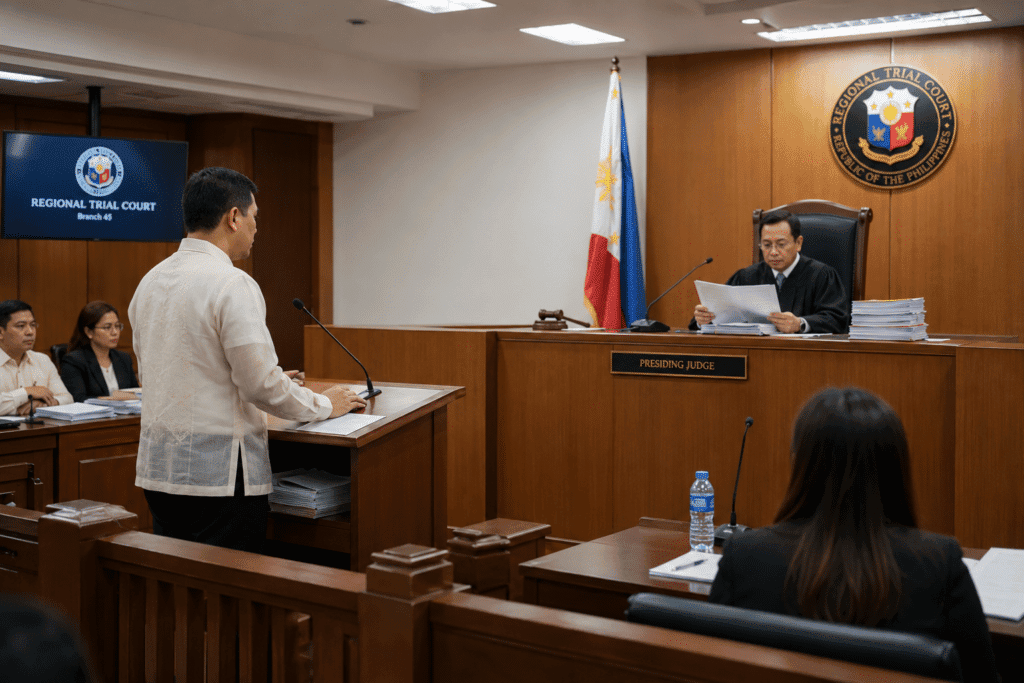
Phase 5: Pre-Trial, Trial, and OSG Intervention
If the prosecutor finds no collusion, the case moves to the Pre-Trial and actual Trial phases. This is where your Annulment Requirements Philippines are heavily scrutinized by the state.
1. Witness Testimonies
You, your psychologist, and your character witnesses will take the stand. You must testify regarding the psychological incapacity or the grounds for fraud.
The state prosecutor represents the Republic of the Philippines. Their mandated job is to actively protect the marriage by cross-examining your witnesses and attempting to poke holes in your legal arguments.
2. The Office of the Solicitor General (OSG)
Before the judge drafts the final decision, all evidence is forwarded to the Office of the Solicitor General (OSG). The OSG acts as the supreme defender of the marital bond.
The OSG will submit a formal memorandum stating whether they agree or disagree with the annulment. While the judge is not strictly bound by the OSG’s opinion, a negative OSG report often leads to an appeal if the annulment is granted.
Phase 6: The Court Decision and the Certificate of Finality
If the judge is fully convinced by your evidence, they will issue a formal Decision granting the annulment or declaration of nullity. However, receiving the decision does not immediately complete your Annulment Requirements Philippines.
1. The 15-Day Appeal Period
After the decision is released, there is a mandatory 15-day waiting period. During this time, the OSG, the public prosecutor, or your spouse has the legal right to file a Motion for Reconsideration or appeal the case to the Court of Appeals.
2. Securing the Entry of Judgment
If no one appeals the decision within the 15-day window, the court decision becomes final and executory. You must then request a “Certificate of Finality” and an “Entry of Judgment” from the Clerk of Court.
These two documents are absolute prerequisites for the final civil registry phase. Without the Certificate of Finality, the Philippine Statistics Authority will refuse to update your civil status.
Phase 7: LCR Registration and PSA Annotation (Restoring Single Status)
The final and most crucial step of the Annulment Requirements Philippines is registering the court victory with the national government databases. Until this is done, you are still considered legally married in the PSA system.
1. Local Civil Registry Registration
You must bring the Certificate of Finality and the Court Decision to the Local Civil Registrar (LCR) of the municipality where the court is located, and the LCR of the municipality where your marriage was originally registered.
The LCR will officially register the court decree and issue a Certificate of Registration. They will then forward these registered documents to the Philippine Statistics Authority (PSA) main office for national updating.
2. The Annotated Marriage Certificate and New CENOMAR
After several weeks of processing, you must request a new PSA Marriage Certificate. This new copy will bear a bold “Annotation” in the margins, officially stating that the marriage has been declared null and void by the court.
Simultaneously, you must request a new CENOMAR Requirements Philippines. Your new CENOMAR (now called an Advisory on Marriages) will reflect the annulment, legally confirming that you are free to remarry.
3. Child Custody and Solo Parent Benefits
If the court grants you full custody of your children, you are now legally recognized as a single parent. You must immediately utilize your court decree to secure state benefits.
Review our Solo Parent ID Requirements Philippines masterclass. Presenting your annulment decree to the DSWD grants you access to specialized tax shields, health benefits, and mandatory workplace leave credits.
⚠ Important Legal & Judicial Notice
RequirementPH operates strictly as an independent, privately-funded educational index designed to map complex public administrative workflows in the Philippines.
We are NOT affiliated, associated, authorized, endorsed by, or in any way officially connected with the Philippine Regional Trial Courts (RTC), the Office of the Solicitor General (OSG), or the Philippine Statistics Authority (PSA).
The information provided in this guide regarding the Annulment Requirements Philippines does not constitute formal legal counsel. Jurisprudence regarding psychological incapacity is highly volatile and constantly evolving under Supreme Court rulings.
Attempting to secure a fake annulment decree through online fixers is a severe criminal offense punishable by lengthy imprisonment. You must retain the services of a verified, Integrated Bar of the Philippines (IBP) licensed attorney.
Always verify your final documentary checklists directly at the local Family Court. For official legal texts regarding the Family Code and annulment procedures, verify directly with the Supreme Court of the Philippines and cross-reference with the Official Gazette of the Republic of the Philippines.
Strategic Resource Links for Petitioners
To ensure your civil identity profiles are fully aligned before initiating a costly legal battle, cross-reference your documentation with our central pillar guides:
- Marriage License Requirements Philippines (Understanding the Baseline Validity of Your Union)
- PSA Birth Certificate Requirements Philippines (Securing Proof of Lineage for Custody)
- CENOMAR Requirements Philippines (Verifying Your Status After the Court Decree)
- Solo Parent ID Requirements Philippines (Claiming Custodial State Benefits)